How Dallas businesses can use AI to write accurate, useful content
A guide to Google's latest AI writing guidance, fact-checking, local content, product descriptions, images, and responsible publishing.

A Dallas business can use artificial intelligence to plan an article, organize an interview, or improve a rough draft. The responsibility for what appears on its website still belongs to the business. A plausible sentence about a warranty, service area, or product specification can be wrong, even when it reads smoothly.
Google's latest guidance makes that responsibility explicit. The task is to build a writing process that catches errors, contributes useful knowledge, and gives customers an accurate picture of what you offer. This guide explains that process for service pages, articles, and online product descriptions.
For customer inquiries, estimates, internal records, and software permissions beyond publishing, our guide to using AI in a Dallas business explains how to select and test a recurring task.
What Google changed on October 1, 2026
Google's documentation change log records an October 1 revision to its generative AI content guidance. Google says the revision aligns the documentation with its developer presentations. This is a documentation change, not an announcement of a new algorithm penalty.
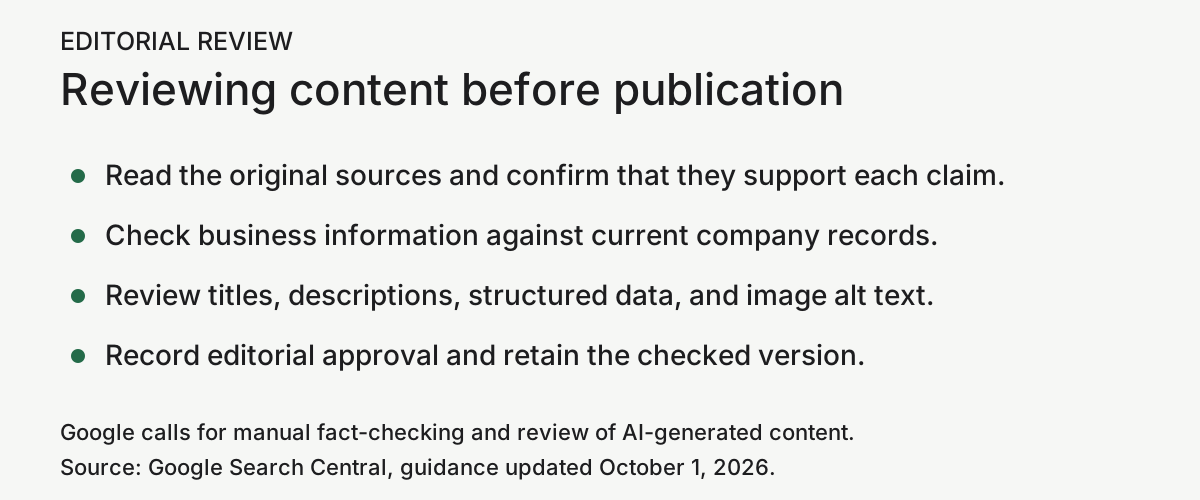
The current guidance calls for manual fact-checking and review before publication. That includes page titles, meta descriptions, structured data, and image alt text. Models can produce inaccuracies, often called hallucinations. A connected search tool can help locate evidence, but a link beside an answer does not prove the answer matches the source.
Search Engine Land and Search Engine Journal reported the revision on October 1. Their coverage helps establish the news context; Google's own documents establish the guidance.
AI writing is allowed; careless mass publishing is the risk
Google's AI content FAQ says appropriate AI use is allowed and gives content no automatic ranking advantage. The relevant question is what the page contributes. A carefully checked explanation can help customers regardless of the drafting tool.
Scaled content abuse means generating many pages primarily to manipulate rankings, with little value for readers. It can involve people, automation, or both. Google's doorway policy also covers substantially similar pages created for closely related searches. Publishing Dallas, Plano, Irving, and Richardson versions of the same generic service text is a poor substitute for useful local information.
There is no published safe percentage of AI text or guaranteed penalty timetable. Replacing punctuation or running a draft through a “humanizer” does not establish its accuracy or usefulness. Treat detector scores as insufficient evidence of editorial quality.
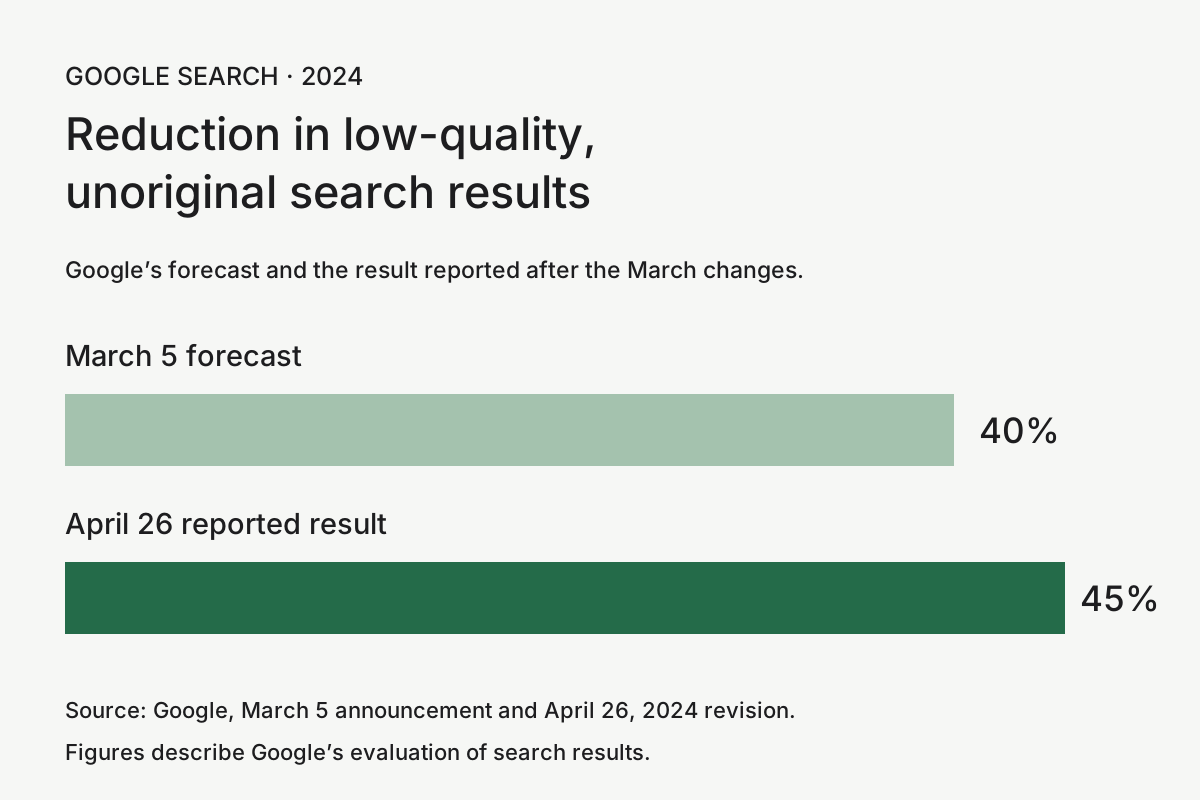
The broader quality effort predates this week's guidance. In April 2024, Google reported a 45% reduction in low-quality, unoriginal search results after its March work and earlier efforts. Google evaluated search results as a whole. The reported figure reflects the March 2024 changes and earlier quality work.
Decide which writing tasks AI can handle
The subject of a page should come from the information customers need before they can use a service or buy a product. Review inquiries received by your staff and identify questions the website does not yet answer. Establish what the business can explain from its own records and experience before asking a writing tool to draft the page.
AI can organize approved notes, suggest an outline, identify missing explanations, shorten repetitive passages, and draft alternative headings. Use it to improve material you understand. Keep decisions about prices, policies, claims, and publication with someone who can verify them.
Keep confidential customer details, account credentials, and unpublished commercial information out of unapproved tools. Remove identifying customer information and work from approved source material. An outsourced writer should follow the same rules as your staff.
A writing process a small team can follow
1. Prepare a factual brief
Write down the audience, question, page purpose, and next action. Gather the current service list, approved prices, product specifications, business hours, and policies. Add interview notes from the person who performs the work. Record the date and owner of each source so the writer knows which version applies.
The brief must describe services the business currently provides and claims it can substantiate. Confirm product specifications against the manufacturer's current documentation, and distinguish those specifications from tests your own staff has performed. The writer needs to understand where each fact comes from and what it establishes.
2. Build the outline before drafting
Arrange the answer in the order a customer needs it: what the service does, who it suits, what is included, limitations, costs or cost factors, and next steps. Ask AI to identify unanswered questions. Reject sections that merely repeat the introduction or wander into subjects the business cannot explain responsibly.
3. Draft from the approved material
Draft each section from the approved brief and supporting documents. Require the writing tool to preserve the supplied prices, locations, qualifications, quotations, and results without adding unsupported details. Any missing information needs a decision from the responsible employee before the passage is ready for publication. These instructions help control the work, but the completed draft still requires a person to check it.
Read the result against the brief. Check that the introduction answers the question and that important exclusions remain visible. A polished draft that changes the business's promise needs correction before stylistic editing.
4. Check every factual claim
Keep a written record of each factual statement, its supporting evidence, the person who checked it, and the resulting correction or approval. A reviewer should complete these checks before the article is published:
- Read the original source and confirm that it supports the statement made in the article.
- Check the publication date, geographical coverage, units of measurement, and population covered by each statistic.
- Confirm business details with the employee responsible for the service or with the current company record.
- Correct or remove claims that cannot be supported by the available evidence.
For a business claim, consult the responsible employee or current company record. For an external claim, prefer the original document. A second AI answer is not independent verification. Have a qualified professional review content involving health, safety, legal rights, or consequential financial decisions.
5. Edit, approve, and keep the record
Read aloud for awkward wording. Replace broad praise with concrete explanations. Remove duplicated headings, empty conclusions, and repeated calls to action. Check the mobile page, links, captions, and contact route. Record who approved the finished version, then keep the brief and claim log for future updates. Keep the revision history with the source records so the next editor can see which business facts were approved and when they were checked.
Add Dallas information you can actually support
Local value comes from accurate operating details, not repeated city names. Explain where you travel, how appointments work, which locations offer a service, and what customers should bring. Mention neighborhoods only when the information is relevant and verified.
Claims about speed, availability, and service coverage need current operational evidence. Check booking capacity, the services covered by a turnaround promise, and the geographical area staff can serve. Describe the actual terms and limitations clearly. Superlatives such as “fastest” require comparative evidence; remove them when the business cannot substantiate the comparison.
For location pages, publish distinct information that helps someone use that location: address, hours, access, services, and genuine photographs. Combine repetitive pages when they have no separate purpose. Never invent a local office, customer story, or staff member.
Google's helpful-content guidance emphasizes original value and trustworthy authorship. E-E-A-T refers to experience, expertise, authoritativeness, and trustworthiness; it is not a single ranking score. Demonstrate relevant knowledge with verifiable explanations, not invented credentials.
Check the parts customers cannot see at first glance
Your review should cover the title shown in the browser, search description, headings, image alternatives, and structured data. Check for exaggerated promises, wrong cities, outdated prices, and services the page does not offer.
Structured data is machine-readable information describing the page. Google's structured data policies prohibit misleading information and require relevant visible content. Do not let AI invent star ratings, reviews, opening hours, or author qualifications. Validate the markup and compare its values with the page, rather than assuming a successful syntax check proves the facts.
Alt text should describe the image's purpose accurately. An illustration of a repair technician is not a photograph of your employee. Keyword lists and fabricated identities make the description less useful.
Use images as evidence where evidence is needed
Show real products, premises, staff, and completed work when those details influence a purchase. Obtain permission for customer photographs and quotations. Generated illustrations can explain a process, but label them and do not present them as a completed job, real customer, or demonstrated result.
A chart needs a source, date, clear units, and limitations. Keep its figures consistent with the accompanying text. A realistic-looking graphic with invented numbers is still inaccurate.
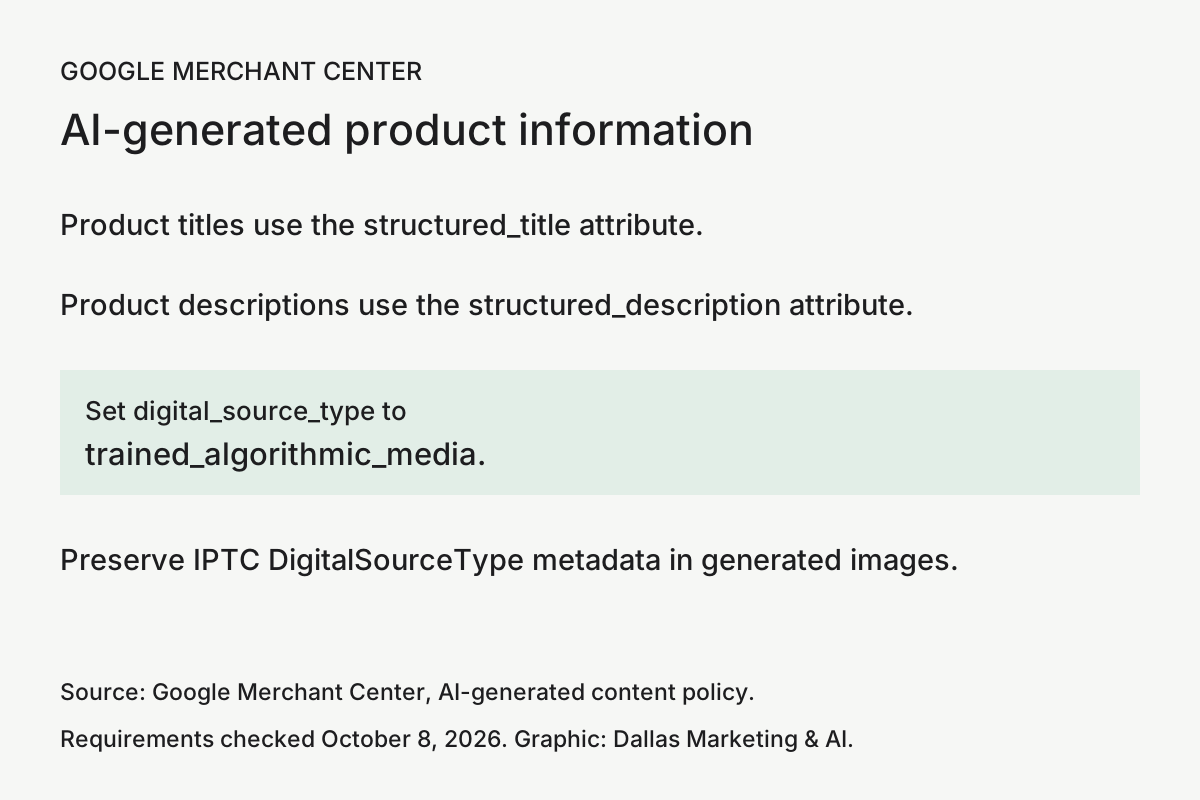
Online retailers also need to distinguish website copy from Merchant Center product feeds. Google's Merchant Center policy requires AI-generated titles and descriptions to use structured_title and structured_description with digital_source_type set to trained_algorithmic_media. AI-generated product images need the appropriate IPTC DigitalSourceType metadata. Check your feed system and preserve those tags during image processing; an ordinary blog disclosure does not replace these requirements.
Be honest about authorship and assistance
Name the person responsible for an article when readers would expect a byline. An agency or freelancer can help draft it, but do not attach a fictitious expert biography. Make the editorial responsibility clear.
Google's disclosure advice recommends explaining automation when readers would reasonably wonder how content was created. An explanation of AI assistance should describe the work performed and identify the person who checked the facts. Publish that information only after the review has taken place. Disclosure does not rescue an inaccurate page.
Make the answer useful in ordinary and AI search
Use descriptive headings, short explanations, named products and services, and clear definitions. State important conditions beside the claim. This helps readers understand individual passages without losing necessary context.
Google's AI search documentation says normal SEO practices remain relevant to AI Overviews and AI Mode. No special AI text file or additional schema is required. Keep important information in readable text, connect relevant pages with internal links, and maintain accurate business information. None of this guarantees an AI citation.
A provider handling this work should explain its sources, reviewers, and approval process. Our Dallas agency selection guide includes questions about deliverables and responsibility.
Review existing pages and measure what matters
Begin an audit with pages that contain prices, service promises, product details, or advice customers rely on. Correct dangerous or misleading claims first. Then improve thin explanations, remove duplication, and combine pages serving the same need. Keep useful existing material instead of deleting everything because AI assisted the draft.
Search Console helps you check indexing and search performance. Compare affected pages and queries, then review actual inquiries, bookings, and sales in your own records. A traffic change alone does not prove an AI-content penalty. Google's AI-feature traffic is included in the Web performance report; that aggregate is not a complete record of individual AI citations.
Set a review date for changing information and assign an owner. Update prices and policies when they change. Recheck the Google update archive for context, while distinguishing announced rollouts from ordinary documentation edits.
For losses during the latest rollout, our September 2026 spam update guide explains how to investigate affected pages, distinguish manual actions from automated changes, and plan repairs.
Questions owners commonly ask
How much should a writer change an AI draft?
There is no useful percentage to aim for. A short edit may be enough for an accurate sentence; a fluent section may need replacing because it answers the wrong question. Judge the finished explanation against the brief and evidence. Editing every sentence mechanically is not a quality test.
Does every page need a long article?
A page explaining pickup hours may need only a concise answer. A buying guide may need more detail. Google says it has no preferred word count. Choose a length that resolves the customer's question without hiding important conditions.
Do Google's quality raters decide my rankings?
Google explains that raters help evaluate its systems, but their ratings do not directly determine a page's position. The guidelines offer a useful quality reference; passing an internal checklist is not a ranking guarantee. Apply the same care to AI-assisted and manually written pages.
The final publishing check
- The page answers a real customer question without unnecessary padding.
- Every factual claim has current evidence or has been removed.
- Locations, prices, exclusions, and qualifications match the business.
- The title, description, alt text, and structured data have been checked.
- Images, quotations, and authorship are represented honestly.
- A named person approved the finished version and owns future corrections.
Start with one important page and establish that routine before increasing output. The useful contribution from AI is faster assistance with a job your business still understands, verifies, and takes responsibility for.
Related articles

How Dallas business owners can put AI to work
A guide to customer inquiries, estimates, marketing, office records, software selection, and keeping control over business decisions.

Google's September 2026 spam update: a guide for Dallas businesses
What Google confirmed, how to investigate lost search traffic, and how to correct policy, security, and publishing problems.

How to choose a web design agency in Dallas
A buyer guide to checking agency work, comparing proposals, understanding costs, and planning a useful handover.