Google's September 2026 spam update: a guide for Dallas businesses
What Google confirmed, how to investigate lost search traffic, and how to correct policy, security, and publishing problems.
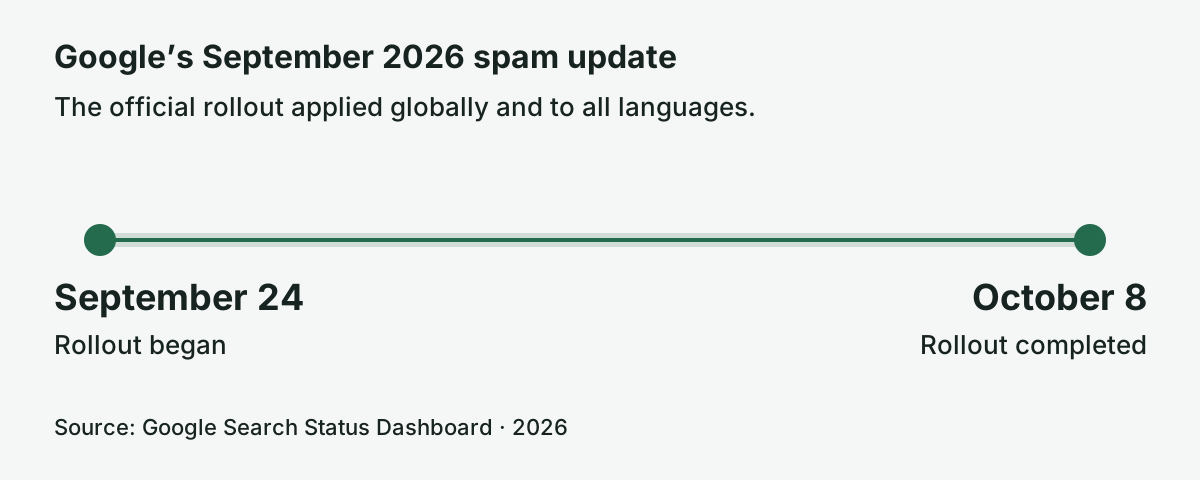
Google completed its September 2026 spam update on October 8, after a rollout that began on September 24. For a Dallas business that relies on search inquiries, a loss of visibility during those two weeks deserves investigation. The useful starting point is the website's own evidence: which pages lost traffic, which searches changed, and whether Google has reported a specific problem.
A fall in rankings does not, by itself, identify the cause. Before replacing content or paying for a recovery service, establish what happened and separate a suspected algorithmic effect from a manual action, a technical fault, or a compromised website.
What Google confirmed about the September update
The Google Search Status Dashboard records a global update affecting all languages, with a September 24 start and October 8 completion. It announced a rollout of up to two weeks. The record describes a spam update; it does not identify a new September-specific policy, a list of affected industries, or separate numbered phases.
SEO commentators reported changes on different days and described them as waves or phases. Those observations can help identify dates worth checking in your records. They do not establish Google's internal process or prove why a particular website changed. Claims that the update specifically detects short sentences, punctuation, or a particular AI writing tool are not supported by the official announcement.
Google's spam update guidance describes improvements to automated spam detection, including its AI-based SpamBrain system. A spam update concerns enforcement of spam policies. A broad core update concerns wider ranking improvements. The name of this rollout should not be used to diagnose every change in search results.
Which practices should a business review?
Google's current spam policies remain the reference for an audit. They cover several practices, including:
- Doorway abuse creates similar pages or sites to capture specific searches and funnel visitors elsewhere.
- Link spam creates links primarily to manipulate rankings, including purchased ranking links and automated link schemes.
- Cloaking and sneaky redirects show search engines or visitors something materially different for deceptive purposes.
- Hidden text and keyword stuffing manipulate rankings through concealed content or unnatural repetition.
- Hacked content introduces unauthorized pages, links, code, or redirects.
- Scraping republishes other people's material for ranking purposes without substantial added value.
- Misleading functionality promises a service or tool that the page does not actually provide.
Scaled content abuse is particularly relevant to large publishing programs. Google's policy announcement from March 2024 explains that producing many low-value pages mainly to manipulate search rankings can be abusive whether people, automation, or both create them. That principle predates the September 2026 rollout.
The same announcement describes expired domain abuse: repurposing an old domain's reputation for low-value content intended to manipulate rankings. The current policies also address third-party content hosted mainly to exploit an established site's ranking signals. Hiring a freelance writer or displaying advertising is not automatically a violation.
Does this mean businesses must stop using AI?
Google's generative AI guidance allows useful assistance with research and the structure of original content. It warns against generating many pages without adding value. Its October 1 clarification calls for manual fact-checking and review, including titles, descriptions, structured data, and image alt text.
That documentation revision is separate from the rollout announcement. It does not prove that every AI-assisted page was targeted in September. A business should examine the finished page and the publishing process rather than treating the name of a writing tool as the diagnosis.
Have the person responsible for the service check prices, coverage areas, qualifications, exclusions, and promises. Preserve useful information supplied by employees who know the work. Remove invented testimonials and unsupported claims. Our guide to AI-assisted content writing for Dallas businesses explains how to carry out that review.
Authorship also needs attention. Google's helpful content guidance warns against fabricated expert profiles, made-up credentials, and generated headshots used to impersonate real authors. Name the actual responsible writer or reviewer and describe their experience accurately.
Check urgent problems before studying rankings
Open Google Search Console and read the Manual Actions and Security Issues reports. Also ask the person maintaining the website whether a release changed URLs, redirects, indexing settings, hosting, or tracking during September. A deployment record can explain a sudden change more directly than a public volatility chart.
- Investigate unexpected redirects, unauthorized administrator accounts, and unfamiliar pages immediately.
- Confirm that important service pages load normally and that inquiry forms still work.
- Check whether analytics tracking changed before treating a reported visit decline as a search decline.
- Preserve exports, relevant logs, and a backup before making substantial repairs.
Google's Security Issues report identifies reported hacking, malware, and social engineering. Its affected URLs are examples, not a complete cleanup list. Correct the underlying vulnerability and all affected areas, test the repairs, and request a security review through that report after every listed issue is resolved.

Establish where the traffic loss occurred
Use Search Console's Performance report to investigate Google search traffic. Google's traffic-drop documentation recommends comparing periods, examining affected pages and queries, and checking indexing, technical faults, and changing demand. Review Web Search separately from other search types.
Mark September 24 through October 8 in the investigation record. Because the rollout has only just finished, a full post-update comparison is not yet available. Use completed dates and comparable periods, keep the same filters, and revisit the analysis as more data arrives.
- Export the pages and queries that lost the most clicks, then identify whether the decline concerns one service, a content section, or the whole website.
- Review impressions, clicks, click-through rate, and average position together instead of relying on a single daily ranking.
- Compare devices and countries to identify a narrower problem, keeping search type consistent.
- Check the Page indexing report and inspect affected URLs for unexpected exclusions or crawl problems.
For a Dallas company, distinguish service inquiries from visits to informational articles. Record leads and completed work alongside search data. A decline in unrelated blog visits and a decline in qualified local inquiries have different business consequences and deserve different priorities.
Keep a dated list of competing explanations: a migration, unavailable pages, changed content, tracking changes, or seasonal demand. Treat the rollout dates as evidence of timing. Search Console does not provide a report that certifies an individual site was hit by this particular automated update.
Review local pages against the actual business
Start with the pages customers depend on before expanding the audit. The reviewer should be able to compare each statement with company records, current procedures, or an employee's direct knowledge. Record the owner of each correction so the same error does not return in the next content batch.
- Confirm that each listed office exists and that the page describes its actual role.
- Check service-area pages for information customers need about coverage, availability, scheduling, and limitations.
- Inspect groups of city pages for duplicated explanations and location claims the business cannot support.
- Review testimonials, project photographs, awards, licenses, and staff biographies against original records.
- Remove irrelevant keyword lists and investigate hidden text or links added by a plugin or contractor.
Dallas, Plano, Irving, and Richardson should appear where they help explain real coverage. Changing a city name throughout the same page does not establish local knowledge. Keep genuinely useful location information, and consolidate pages that duplicate the same customer need. Useful local pages can share a design without becoming doorway pages; their purpose and substance matter.
Ask outside providers for a record of pages published, links obtained, and subcontracted work. Our agency selection guide covers responsibility and deliverables. A recovery proposal should identify the evidence behind its diagnosis and describe the changes it will make.
Correct the cause without creating another problem
Assign repairs according to their consequences. Security and broken access require prompt work. Inaccurate business claims require correction. A group of weak articles needs an editorial decision about what deserves improvement, consolidation, or removal. Preserve the pages that already serve customers well.
For pages kept live, check that the title, main text, images, and structured data describe the same actual service. Replace copied filler with verified explanations. Maintain relevant internal links and update them when URLs change. Keep a record of the old URL, the action taken, its reason, and the date.
Pages excluded from search need the appropriate technical treatment. Google's noindex documentation explains that Googlebot must be able to crawl a page to see its noindex instruction. Blocking that page in robots.txt can prevent the instruction from being read. Removing selected pages from the index does not, by itself, confirm that all policy problems have been corrected.
Review links you or your providers deliberately arranged for ranking purposes. Do not upload a blanket disavow file merely because an SEO tool assigns a toxicity score. Google's disavow guidance says most sites do not need the tool. It describes its use for substantial artificial or low-quality links that have caused, or are likely to cause, a manual action, after attempting removal. Incorrect use can harm search performance.
When should you request reconsideration?
A manual action involves human review and appears in Search Console. An automated ranking change has no equivalent reconsideration application. An empty Manual Actions report rules out a listed manual action; it does not establish that automated systems found the site compliant.
Follow the instructions for the specific manual action. Correct the full affected pattern, not just the example URLs, and resolve every listed action before requesting review. Explain the original problem, the work completed, and the evidence that it was corrected. Google says reviews can take days or weeks, sometimes longer. Do not submit another request while a decision is pending.
Keep supporting records available to the business owner. Link-removal correspondence, content revisions, and the results of technical checks provide a clearer account of the repair than a general statement that the website was improved.
For everyday profile maintenance and service-area website checks, our local SEO guide for Dallas service businesses explains address arrangements, categories, reviews, useful coverage pages, and indexing.
Check the evidence behind common update claims
Project photographs should show work the business actually completed. A Dallas roofer should not present a stock photograph as its own finished installation. Google's image guidance recommends relevant, high-quality images; it does not identify stock photography as a confirmed target of this September rollout.
A comparison or review needs evidence supporting its conclusions. Explain the selection criteria and identify any affiliation rather than repeatedly placing the publisher first without supporting analysis. Google's review guidance calls for original evidence and useful comparisons. A competitor's traffic chart alone cannot establish why it lost rankings.
A domain containing Dallas and a service name is not evidence of a spam violation. Google's exact match domain system limits excessive credit for query-matching domains. It is not an announcement of a September penalty for every descriptive business address.
Low traffic also needs investigation before deletion. Check indexing, demand, seasonality, internal links, and the page's customer purpose. Remove or consolidate content for a documented reason; zero clicks during a short period do not by themselves justify returning a 410 response.
What should owners expect after repairs?
Google's spam update guidance says ranking improvements may follow as automated systems learn that a site complies over a period of months. It gives no guaranteed recovery date. A subsequent update or another site's recovery story cannot establish when your traffic will return.
Monitor the affected pages with consistent filters and keep recording changes. Continued loss deserves further investigation; a brief improvement does not establish a lasting recovery. Judge progress alongside qualified inquiries and customer use of the repaired pages.
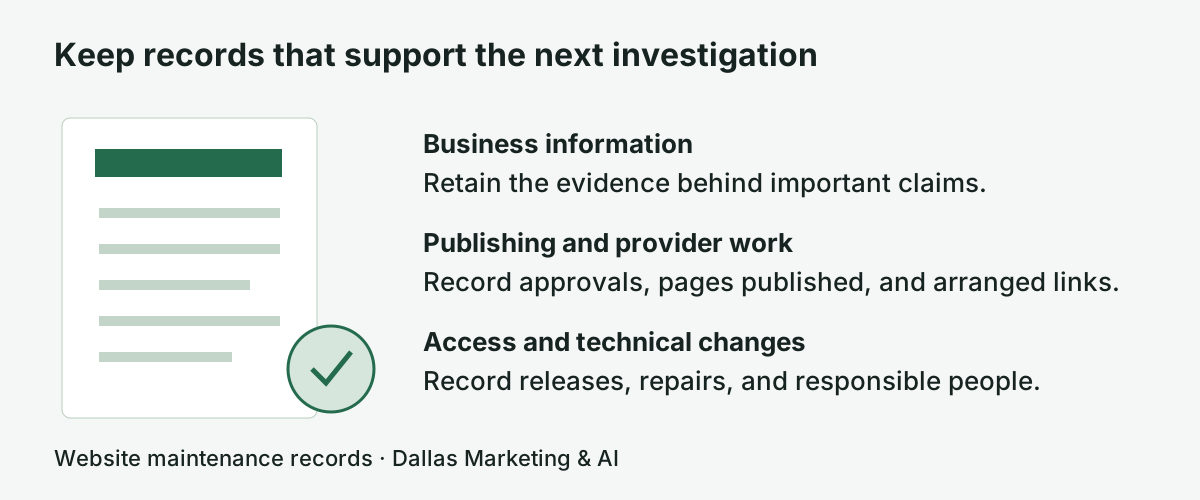
Prevention depends on routine responsibility rather than a one-time cleanup. Require approval before bulk publishing, retain the evidence behind important claims, and review outsourced work. Keep website access under the business's control and make someone responsible for maintenance and Search Console messages.
The Google update archive provides dates and official sources for future comparisons. Use it alongside the site's own records. A business that knows what it published, who authorized it, and what changed is better equipped to investigate a loss and make a justified repair.
Related articles
Local SEO for Dallas Service Businesses: Google Maps, Business Profiles, and Service Area Pages
A review of business profiles, address rules, services, reviews, Dallas coverage pages, and website indexing, with observations from real local websites.

How Dallas businesses can use AI to write accurate, useful content
A guide to Google's latest AI writing guidance, fact-checking, local content, product descriptions, images, and responsible publishing.

How to choose a web design agency in Dallas
A buyer guide to checking agency work, comparing proposals, understanding costs, and planning a useful handover.