Local SEO for Dallas Service Businesses: Google Maps, Business Profiles, and Service Area Pages
A review of business profiles, address rules, services, reviews, Dallas coverage pages, and website indexing, with observations from real local websites.
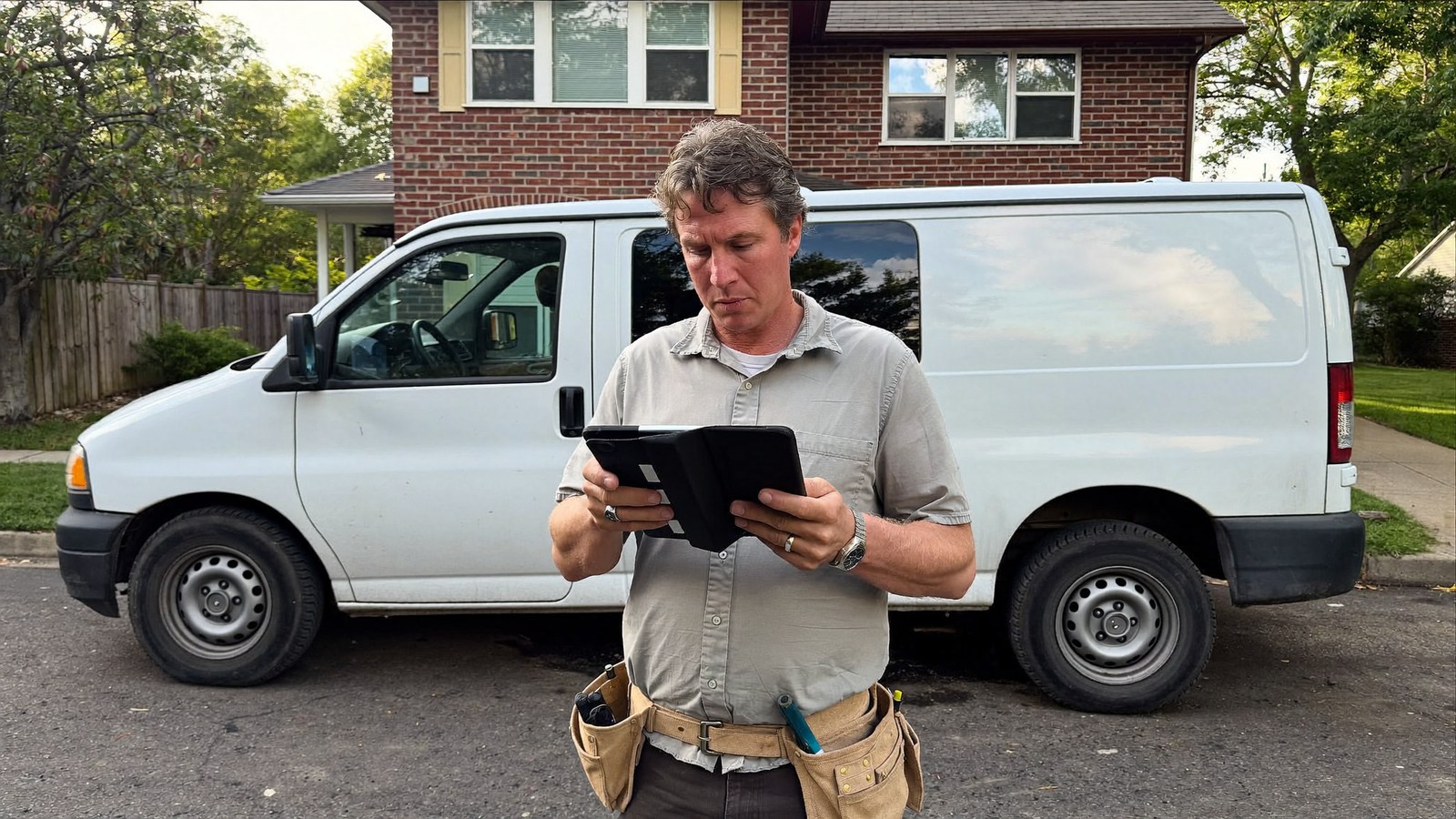
A Dallas contractor's next customer may begin with Google Maps, a search for a particular repair, or a question about which company serves their neighborhood. The business information must answer those questions clearly. A working phone number, an accurate service description, and an honest explanation of availability matter before the customer ever reaches a booking form.
Local search involves two connected parts: the Google Business Profile that appears in Maps and local results, and the website pages that explain the company's work. A plumbing company can maintain a detailed website while leaving its profile incomplete. An electrician can keep a reliable profile but send visitors to a page that never explains the service they need.
This guide covers both parts, with checks for Dallas plumbers, electricians, mobile mechanics, cleaning companies, and other businesses that travel to customers.
Understand why local results change across Dallas
Google describes local ranking in terms of relevance, distance, and prominence. Relevance concerns the match between the business and the search. Distance concerns the searcher's location. Prominence includes information such as reviews and links from other websites. Complete business information helps Google understand what a company does. Google's local ranking guidance explains these factors.
A search made in Lakewood and one made in Oak Cliff can therefore produce different results. Being visible near the office does not establish visibility across Dallas. Adding more cities to a service-area list should not be treated as a way to remove the distance factor.
Keep Maps results separate from ordinary website results when evaluating performance. A competitor's position in one search does not reveal which individual change produced it. Review count, business name, and website size are observations, not a complete explanation of ranking.
Check the business name, ownership, and contact information
Start by confirming that the owner can access the correct Business Profile and that the business is verified. Check the public listing as a customer would: follow the website link, call the listed number, and compare the name with the website and real business branding.
Google requires the name to reflect the business as it is represented in the real world. Adding Dallas, emergency services, or a list of trades solely to attract searches can violate its rules. Keep those details in the appropriate service, description, hours, and location fields. Google's business representation guidelines also cover duplicate profiles and eligible locations.
- Confirm the main phone number reaches the business responsible for the listing.
- Send visitors to a working page that identifies the same company.
- Remove obsolete contact details from the website and directories the business controls.
- Investigate duplicate profiles before creating another listing for the same operation.
Use the correct address and service-area arrangement
A service-area business visits customers and does not serve them at its own address. Google says that this type of business should remove its address from public display. A hybrid business both receives customers at its location and travels to them; its address and service area can both appear. These distinctions are explained in Google's service-area instructions.
A mobile mechanic working from home should not display that home as a customer-facing shop merely because competing listings show addresses. A plumber should not create a Dallas office listing for an address where the company has no eligible operation. Coverage and physical premises are different facts.
List the cities or postal areas actually served and revise them when coverage changes. Google permits up to 20 service areas and generally advises keeping the overall area within about two hours' driving time of the business base, with exceptions for some businesses. That limit is not a recommendation to fill every available field.
Describe the work accurately through categories and services
The primary category should describe the core business. Additional categories should reflect genuine business activities. Google advises using the fewest categories needed to describe the overall business, rather than assigning a fixed target number.
Services provide a separate place to explain individual offerings. A plumbing business should check that its actual drain, water heater, leak, and fixture work is represented where the editor is available. An electrical contractor should review its real repair and installation work. Do not add a service the company cannot deliver or duplicate entries merely to repeat singular and plural keywords.
Google's services editor documentation explains how to add services and their details. Review the list with the employee who schedules work, since the office often knows which inquiries the company must decline.
Make hours and emergency availability understandable
Opening hours, phone answering, appointment availability, and emergency dispatch can describe different activities. The website should explain the actual arrangement rather than leaving readers to infer that answering a call guarantees an immediate visit.
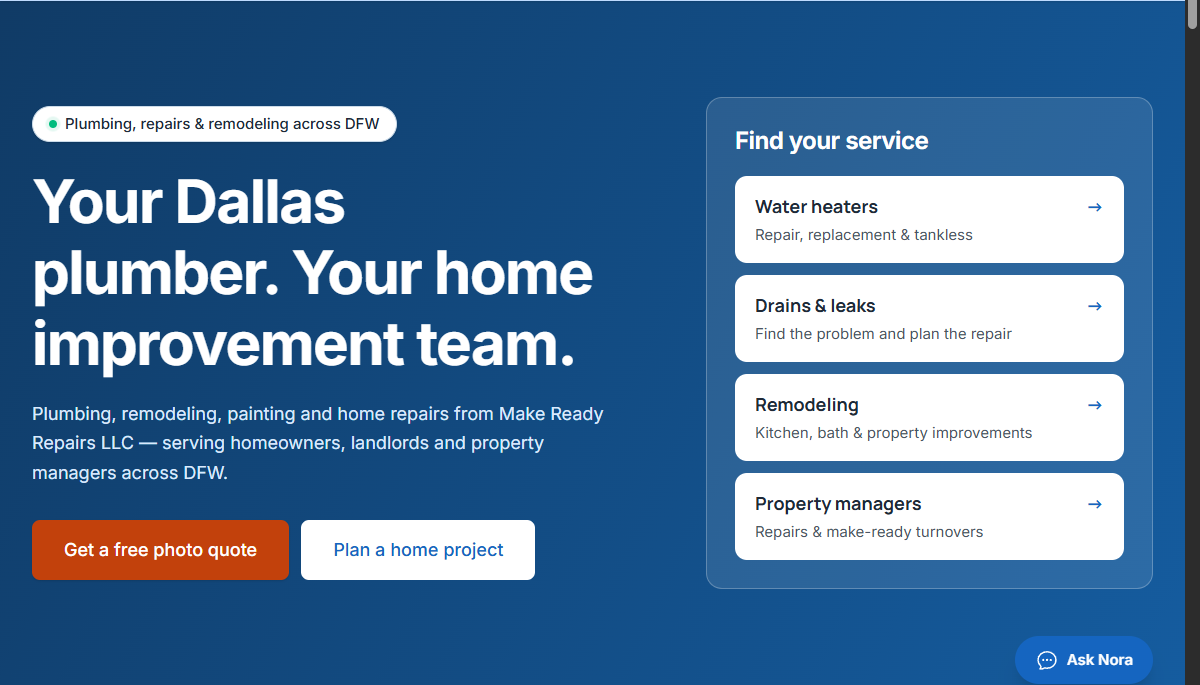
During our October 9 review of DallasPlumber.com's homepage, we found a useful distinction: the page describes service by appointment and says emergency calls receive priority for the next available dispatch, with availability confirmed before dispatch. That wording gives owners a concrete point to check in their own copy: does an emergency claim explain what the customer can actually expect?
Keep profile hours consistent with the applicable business-hours rules and update special hours when needed. Before posting a response-time claim, check that the office can support it. Dallas traffic and a team's existing appointments make an unqualified arrival promise a business commitment, not merely website copy.
Give each important service a useful website page
Separate service pages help visitors find the explanation relevant to their problem. Describe the work, the information needed before scheduling, limitations, and the next contact step. Use a clear page title and heading. A photograph alone cannot explain whether the company handles a particular repair.
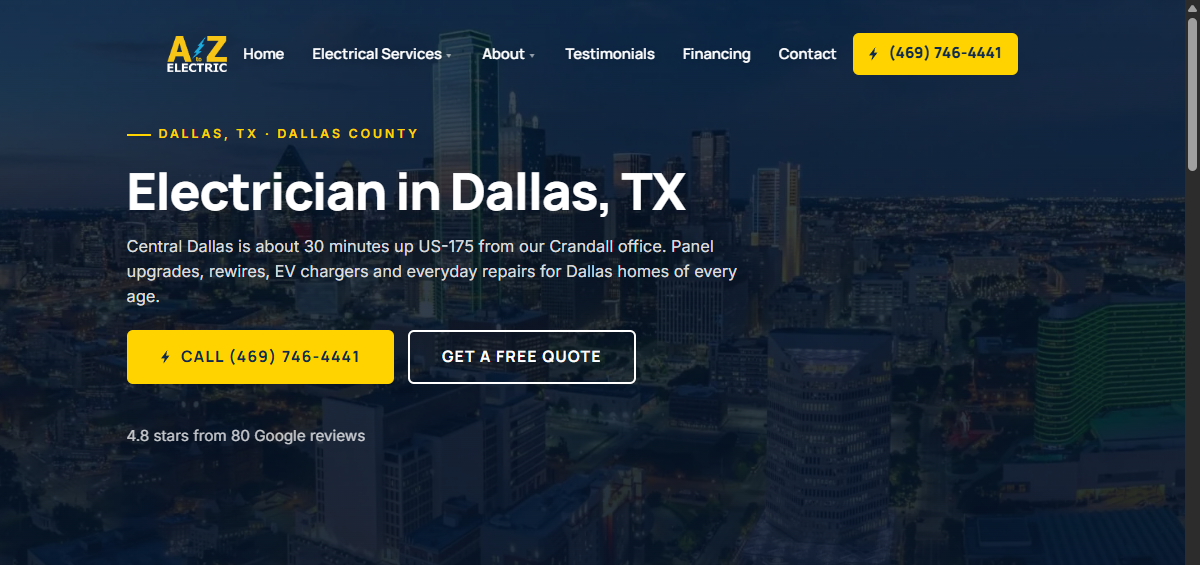
Our review of A to Z Electric's website found navigation to distinct pages for panel upgrades, wiring, electrical repairs, and EV charger installation. Its Dallas page also identifies Dallas coverage and discusses types of electrical work. These are observable features of the website; owners can check whether their own navigation connects customers to similarly specific service information.
The important question is whether each page answers a different customer need. Creating several pages for minor wording variations can leave visitors reading the same explanation repeatedly. Combine overlapping material where one complete page would serve them better.
Create Dallas location pages only when they have something useful to say
A city or neighborhood page should explain genuine coverage and the work available there. Decide what the customer needs that the main service page does not already provide. Useful information can include booking arrangements, actual access requirements, verified completed work, and service limitations that apply to that area.
Changing Dallas to Richardson throughout an otherwise identical page does not establish a useful reason for another page. Google's spam policies describe doorway abuse and scaled content abuse. The concern is pages created to capture searches without useful added value, including many similar pages that funnel visitors to the same destination.
There is no official rule that every location page must be 50 percent different, and no approved monthly quota of location pages. Review the purpose and substance instead. Do not invent completed jobs, customer quotations, arrival times, or neighborhood knowledge to make a page appear distinctive.
A coverage page can link to the relevant service pages and nearby areas where those destinations genuinely help the reader. Keep the links descriptive and accessible. Google explains crawlable links, page titles, useful content, and image descriptions in its SEO Starter Guide.
Maintain genuine reviews and photographs of actual work
Ask customers for honest feedback using the review link or QR code available through the profile. Do not offer discounts for reviews, reward positive ratings, or filter requests so that only satisfied customers reach Google. Its review guidance requires genuine experiences and prohibits incentives.
Reply professionally, especially when someone raises a specific problem. Explain what can be resolved, move private details into a direct conversation, and avoid arguments or identical pasted replies. A reader deciding whether to call will see how the business treats a dissatisfied customer.
Photographs should show the real team, equipment, premises where applicable, and completed work. Obtain permission before showing a customer's property and remove identifying details that are unnecessary. Keep technical location metadata out of the main strategy: it does not replace useful photographs or accurate service information, and this guide makes no ranking promise for geotags.
Check indexing and measure the enquiries that matter
Use Search Console's URL Inspection and Page indexing report to investigate important service pages. Check the reported reason before changing content. A redirected URL or a duplicate with a chosen canonical can be an expected exclusion. Crawled, currently not indexed does not by itself prove a spam penalty.
Review technical access, intended canonical URLs, internal links, and the page's usefulness together. A sitemap helps discovery but does not guarantee indexing. Avoid relying on the number displayed by a site search as a complete inventory of Google's index.
Compare website search data with Business Profile activity and the enquiries the office receives. Track qualified calls, relevant service requests, and completed bookings where those records are available. A visible position in one Maps search is less useful than knowing whether the right customers can find and contact the company.
Structured data should match the business and visible page information. Google's LocalBusiness documentation explains the format and validation. Do not mark a service-area page as a separate physical office or add invented ratings to satisfy a tool.
Put the corrections in a sensible order
- Correct inaccurate identity, contact information, hours, and address arrangements before adding pages.
- Review categories and services against the work the company actually accepts.
- Repair broken website destinations and make the main service information easy to find.
- Review existing Dallas coverage pages for duplication, unsupported claims, and missing customer information.
- Check indexing reasons, maintain genuine reviews and photographs, and record the results of each meaningful change.
A sudden decline needs a separate investigation. Our September spam-update guide explains traffic checks, manual actions, security issues, and policy repairs. For businesses using AI to prepare local copy, the AI content-writing guide covers source checking and editorial responsibility. Owners arranging website changes can also use our agency-selection guide to define scope, access, and handover.
Maintain the profile and website as records of a real business. The most useful local information tells a Dallas customer what the company does, where it works, when help is available, and how to reach the right person.
Related articles
Google's September 2026 spam update: a guide for Dallas businesses
What Google confirmed, how to investigate lost search traffic, and how to correct policy, security, and publishing problems.

How Dallas businesses can use AI to write accurate, useful content
A guide to Google's latest AI writing guidance, fact-checking, local content, product descriptions, images, and responsible publishing.

How to choose a web design agency in Dallas
A buyer guide to checking agency work, comparing proposals, understanding costs, and planning a useful handover.